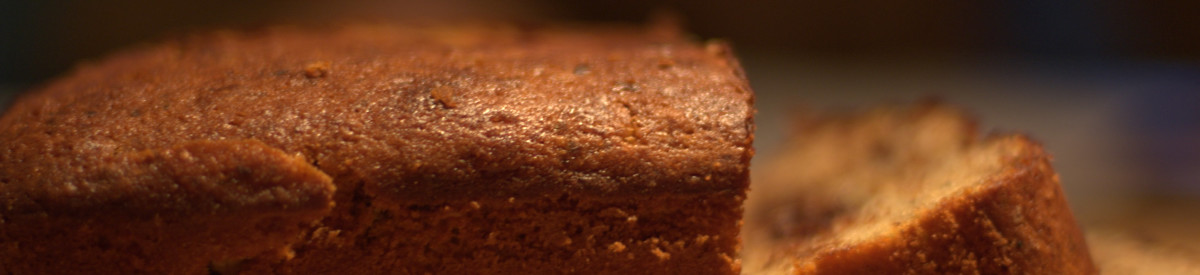
The Christmas-time milk bun in parts of France and Belgium

They are known in northern and north-eastern France as cougnous or queugneux or coquilles. Some of those names probably originated from old local languages. My sister also finds them in Belgium, where she lives.  You will see the Christmas-time milk bread bun in bakeries around Christmas. The queugneux are individual Christmas-time milk buns or brioches shaped in the form of a swaddled newborn child.

Recipes vary slightly, some being more milk buns, others more brioche.  This recipe is more a milk buns, brioche having twice as much butter.

They are served warm at breakfast on Christmas Day, ideally with a nice hot chocolate.  The Christmas-time milk bread buns will keep for 2-3 days in a bag. I like to heat them up before breakfast, you can also toast them when they get to day 2.

Christmas milk bun

These buns are best done with a dough mixer (KitchenAid or other), see my note at the end to make it without a mixer

Ingredients:

Yields about 25.

  • 1 kg plain flour (use baking flour if you have any, else the standard supermarket flour works well too)
  • 4 eggs (200 g shell excluded, if your 4 eggs weight of egg white and yolks is over 200g, reduce the milk to 380g)
  • 250 g soft butter
  • 100 g caster sugar
  • 30 g of fresh yeast (dilute in the milk) or 3.5 teaspoons of dry yeast
  • 400 ml milk
  • 18 g salt
Method:
  1. In the mixer bowl, place flour, eggs, milk and yeast.
  2. Mix to a rough dough for less than a minute on slow and rest for  15 minutes.  This step is just to combine flour and liquids and allow the flour to hydrate.
  3. Now on medium-high speed, add the salt and the sugar progressively over 3 minutes. Progressively add,  the soft butter over another 3 minutes.  In this recipe, we will not be developing the dough as much as in a brioche. So we can stop here and allow the dough to rest and rise. Remove the hook and if wished transfer to a clean bowl, cover the bowl with a clean tea towel and allow to rise.
  4. Rising time will depend on your room temperature. In Sydney, it can be 40 minutes, but i a old room, it would be up to 2 hours.
  5. Once risen, gently transfer the dough to the kitchen bench. At this stage, you may want to have flour nearby to use to prevent sticking on your hands. Be careful to use as little as possible for your hands, not to introduce more flour into the dough. I find the kitchen bench doesn’t need any.
  6. Deflate the dough by pressing gently on it. Be mindful that you are not aiming at squashing the dough, only to release some of the gas. Using a dough scrapper, divide the dough into balls of about 80-90g, which would be about the size of a tennis ball.
  7. First, gently spread the dough into a circle, pulling gently on the dough; it does not have to be regular.
  8. For each ball, we are now going to shape the bun
    • Consider the dough has 4 cardinal points and bring each to the middle of the circle. Repeat.
    • Bring all the extremities together and pinch them a little together (to “close” the ball).  Turn the ball over, stitching down.
    • With your fingertips of each hand touching each other and placed on the kitchen bench (the little fingers are touching the bench, the others are over it), you form a wall behind the dough ball that you will pull toward you 15 cm or about without lifting the hands from the benchtop.
    • With this action, the dough will spread in length and tighten around.  Repeat a few times.
    • Once you get a length of 0f about 15 cm, use your right or left thumb when doing a last pull to form the head of the newborn shape by constricting a little the dough 1/3 into the shape.
    • Now, transfer and place over a sheet of baking paper on a baking tray.
  9. Once all the shapes are ready, cover with a tea towel and allow to rise (about double).
  10. Heat up the oven to 180ºC. In the meantime, break an egg, placing the yolk in a small bowl or cup and adding 1 teaspoon of water, mix. Brush this over each shape before placing the tray into the oven.
  11. Cook until golden brown and cool down on a cooling rack.
Using a manual method:

If you are without a mixer, it will take a bit more time. Because the recipe does not require strong gluten development, it is entirely feasible to make by hand.  Once your flour has hydrated, do a well (or a hole into the mix) and add the rest of the ingredients all at once (sugar, salt, butter).  From here, you can choose to knead for 10 minutes or place in a big bowl and “punch” the dough every 10 minutes. Punching the dough is a method used in bread making where you consider that your ball of dough has 4 corners and you pull each corner at a time, up and into the centre. Do that twice each time, and turn over the dough.  During this time, the dough will slightly rise at the same time, so if it is hot in your kitchen, you may want to bring the interval closer to 5 minutes.

Christmas milk bun

Christmas milk bun
Queugneux or cougnous, here with a different shape as sometimes seen in bakeries

Santa madeleines, a fun Christmas treat to prepare with children and adults

Those are Santa madeleines. This is a fun Christmas treat to prepare with children and adults.  My older daughter – who is 11 years old – ha that idea for her classmates. The teacher had placed a Christmas sock at the back of each student’s chair. I think those Santas did not stay long in the socks!

It is fun to make those Santa madeleines, not just for the children, I found that pretty cool too!

Before you start, it may be a good idea to wear aprons.

The concept of the Santa madeleine

Make a bunch of madeleines. You will need the special madeleine prints for this. The recipe I use is HERE. If you aren’t a fan of the lemon taste, don’t put any, you can put a dash of good quality vanilla extract.

You will need food colouring of a rich red colour from your supermarket.

Once the madeleines have cooled down, you can start the icing and complete your Santa madeleines! Note that the icing will need a few hours to dry fully, overnight is better.

You will need to make a white icing, a red icing and have found some little eyes bits (from the shops) for the eyes. If you want to add a pompon-like item, you can find little sugar stars for example. you will find those in the baking section of the shops.

Making and applying the icing

To prepare the icing, you need:
  • one lemon or two squeezed lemons
  • 2-3 cups of icing sugar sifted (to avoid any lumps)
  • the red food colouring

For the white icing, place a cup of the sifted icing sugar in a bowl, add about 1/2 lemon juice. Just add a little at the time and start mixing. You basically want something quite pasty, a bit like Nutella when at room temperature (or maybe a tiny bit more fluid). If you went too far, i.e. your icing is too liquid, add more sugar!

For the red, start with the red food colouring and then add the lemon juice. Aim for the same consistency a the white. Be mindful to not mix the utensils you are using.

To apply the icing on your Santa madeleines

When there are kids involved, I am all for simple tools. We used toothpicks to draw the hat border and small spoons for the beard and hat.

To attach the eyes on your Santa madeleine, put a little white icing underneath each eye and “glue” them to the madeleine.

To clean your kitchen bench

The red icing is messy (the white as well but it cleans without a trace).  Use baking soda and a bit of water to form a paste and rub your kitchen bench. it should come off very well!

Raspberry and Lime Christmas Log (buche de Noel)

This raspberry and lime Christmas log (or buche de Noel) is a light and refreshing dessert for the Christmas period.  Perfect for Christmas under the sun! Bookmark the recipe for the bavarois recipe which you can do on its own served with red berries.

Bavarois Christmas log

The bavarois of this recipe must be prepared a day ahead.

Concept
  1. A core of raspeberry bavarois
  2. A blanket of mascarpone&lime
  3. A macadamia crumble

bavarois christmas log

Ingredients
For the bavarois:
  • 300 g of frozen raspberry
  • 3 small egg yolks
  • 250 ml of milk
  • 130 ml of cream
  • 110 g of caster sugar
  • 4 gelatine leaves (I used the ones from the supermarket)
For the m and lime blanket:
  • 500 g of mascarpone
  • 100 ml of cream
  • rind of 1 lime
  • juice of 1 lime
  • 1/2 cup icing sugar
  • 2 egg yolks
For the nut crumble:
  • 10 macadamia (raw)
  • 30 g soft butter
  • 1 pinch of salt if the butter is unsalted (otherwise, omit)
  • 2 generous tbsp plain flour
  • 1 tbsp white sugar
Method:
Raspberry Bavarois
  1. Prepare your mould.  I used a cake loaf as a general support, buttered and blanketed in cell wrap, a sheet of flexible cardboard (buttered and covered in cell wrap) and curved as a semi-cylinder.
  2. Mix sugar and egg yolks until pale and creamy, add a little of the milk to make slightly more liquid.
  3. Place the gelatine leaves in a bowl of cold water.
  4. In the meanwhile, heat up the rest of the milk to boiling point.
  5. While the milk is warming up, place the frozen raspberry in the microwave for 1 minute (full power), then blend in the blender to obtain a juice. The raspberry juice will still be cold.
  6. While whisking, add the hot milk to the egg-sugar mix, mix well. Transfer to the saucepan and on a medium heat, mix continuously until it thickens.  The custard MUST NOT boil.
  7. Remove from the fire and transfer in a bowl
  8. Squeeze the water out of the gelatine and mix the gelatine until fully dissolved with the warm custard.
  9. Add the raspberry juice, mix well.
  10. Whip the cream to soft peaks and mix in gently to the custard mix either using a largebavarois christmas log wisk or a silicone spatula.
  11. Pour into the tin, cover with cell wrap and place in the fridge at least 15 h prior to decorating.

Tip: For the custard, you will know it is ready when a spoon placed in the saucepan comes out with the custard covering/blanketing the back of a spoon (not runny).


Mascarpone & lime blanket
  1. Place all the ingredient in a stand mixer or large bowl.
  2. Whisk until smooth and fluffy.
Nut crumble:
  1. Whiz all ingredients in a small food processor.
  2. Place on a piece of baking paper on a baking tray.
  3. Toast under the oven grill until lightly coloured, toss around, place again under the grill until you get a nice brown colour. Be carefull, when it starts toasting, the colour changes quickly.
  4. Remove from the oven, cool down, and store in a bowl or airtight container until required.
Assembly:
  1. Unmold the bavarois by turning it straight onto the serving dish.
  2. Prepare the lime & mascarpone blanket and using a spatula, gently spread on the sides and ends.  Using a fork, make patterns.
  3. Dust more lime rind all over, place a few mint leaves and some cocoa nibs.
  4. Place the crumble all around.
  5. Keep in the fridge until ready to serve.


Chocolate truffles

This recipe makes about 50 truffles.  The name refers to the likeness to the highly prized truffles grown in the earth and used in refined cooking. Those chocolate truffles are easy to make and just delicious. They keep for a couple of weeks. Make sure you use a good quality chocolate,
Ingredients:
  • 330 g of dark chocolate 70% cocoa
  • 25 cl (250 ml) of cream
  • 50 g of good quality soft butter (real butter please, no substitute here)
  • Cocoa for rolling (I like using dutch cocoa)
Method
  1. Cut the chocolate in small pieces with a large knife, place in a bowl.
  2. Boil the cream in a saucepan
  3. Pour the cream on top of the chocolate, cover for one minute then mix well until all the chocolate is melted.
  4. Add the butter, mix well.  Place in a shallow container and refrigerate for 2 hours minimum until firm.
  5. When ready to shape the truffles, put a tablespoon of cocoa in a soup plate or large bottom bowl.  With a teaspoon, scoop out the equivalent of a macadamia nut (for those who don’t know macadamia, it is between a walnut and an hazelnut). Roll in your hands to form a ball, then place in the cocoa and move the bowl around or roll the truffles with your finger tips.
  6. Transfer to a serving plate or storage container.

This recipe of truffles does not have eggs, it will keep in the fridge for over a week.  You may find they disappear before!

Tip: If you are using couverture chocolate, you need to be a bit more careful when doing the ganache to prevent splitting when adding the butter. you may want to melt 2/3 of the chocolate first, then the next 1/3 to the mix.  If the ganache splits, warm it up slowly mixing until it comes back together.

20160305_130844